



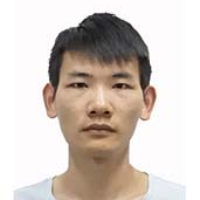
Xiaolong Zheng 編集者 at IgMin Research
Our mission is to encourage knowledge exchange between fields to promote rapid growth.
バイオグラフィー
Xiaolong Zheng received the B.S. degree in automation from Yangtze University College of Technology and Engineering, Jingzhou, China, in 2013, the M.S. degree in control theory and control engineering from Bohai University, Jinzhou, China, in 2016, and the Ph.D. degree in control science and engineering from Harbin Institute of Technology, Harbin, China, in 2020.
He is currently an Assistant Professor with the Research Institute of Intelligent Control Systems, School of Aeronautics, Harbin Institute of Technology. His research interests include adaptive control, neural networks, reinforcement learning and their applications. He has published over 30 International journal papers (including 13 IEEE Transactions series papers). According to Google Scholar, his published papers have received over 2271 citations with H-index 20. He has 11 authorized invention patents. These research results have attracted great attention from the domestic and international scholars.
研究の興味
Nonlinear Systems; Adaptive Control; Neural Networks; Robotics; Artificial Intelligence.
Editor
仕事内容
Assistant Professor
Harbin Institute of Technology
School of Aeronautics
China
 0000-0003-0369-7221
 トピック分野別の貢献
Why publish with us?
Global Visibility – Indexed in major databases
Fast Peer Review – Decision within 14–21 days
Open Access – Maximize readership and citation
Multidisciplinary Scope – Biology, Medicine and Engineering
Editorial Board Excellence – Global experts involved
University Library Indexing – Via OCLC
Permanent Archiving – CrossRef DOI
APC – Affordable APCs with discounts
Citation – High Citation Potential
現在トレンドになっている記事はどれですか?
研究論文
- Abrasive Wear in Some High Fe-Cr-C Alloy in Cement Powder
- Landing Site Selection for the First Human Mission to Mars
- Clinical MLOps: A Framework for Responsible Deployment and Observability of AI Systems in Cloud-Native Healthcare
- Effect of Rainfall on Water Parameters in Recreational Lakes in Heidelberg, Germany
- Towards Sustainable Fisheries Management in Tunisian Reservoirs: A Stock Assessment Approach
- A Machine Learning-based Method for COVID-19 and Pneumonia Detection