




目次 at IgMin Research
Our mission is to encourage knowledge exchange between fields to promote rapid growth.
Article Explorer
How Increased CO2 Warms the Earth
Comparing Forecasting Models for Predicting Infant Mortality: VECM vs. VAR and BVAR Specifications

Purification of Monoacylglycerides using Urea
 Research Article
How Increased CO2 Warms the Earth
It is widely believed that emission of greenhouse gases, particularly CO2, is warming the world, and the consequences of this are serious. The world is heavily engaged in reducing emissions of CO2. The global effort to reduce emissions involves investment of very large sums, yet the proper scientific explanation of how CO2 warms the Earth is not widely understood. The objective of this research is to provide a clear, understandable description and quantitative model of the physics whereby increased CO2 produces global warming.
The Sun continuously inputs power at 341 W/m2 to the Earth, and the Earth radiates power to space. The difference between the two determines whether the Earth warms or cools to maintain a power balance. The approach taken here is to estimate the effect of rising CO2 on the ability of the Earth to radiate power to space.
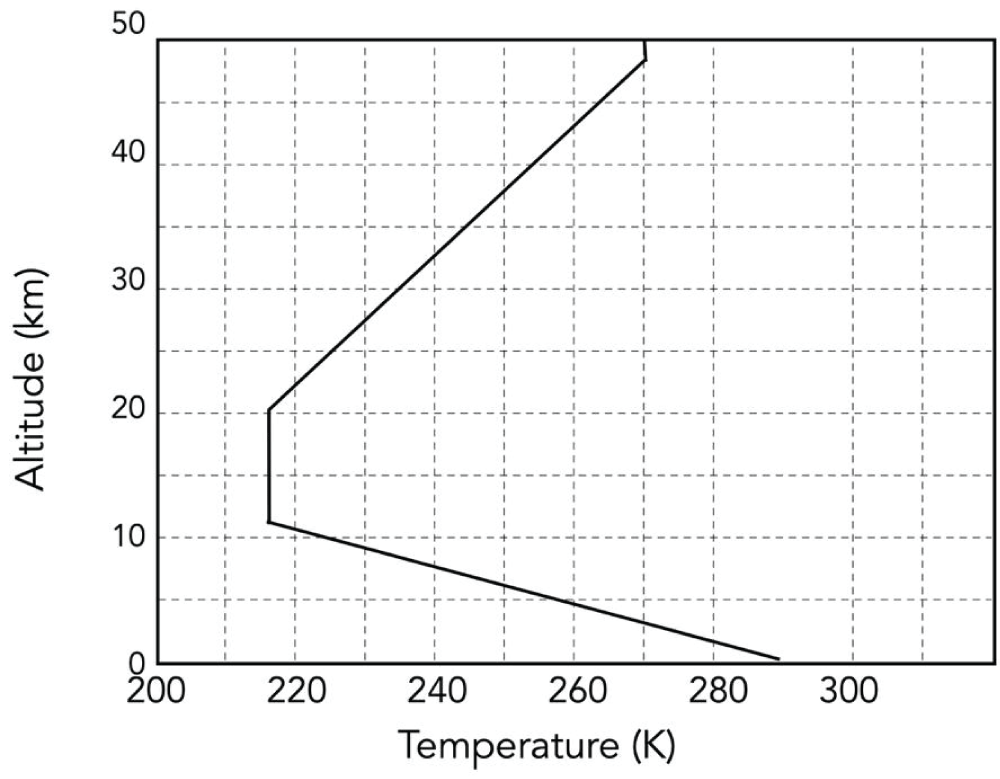
The methodology involves dividing the Earth’s atmosphere into 150 100-m layers and modeling CO2 irradiance (12-17-micron wavelength band) through these layers. Each layer radiates in the IR according to the Stefan-Boltzmann law at its temperature. As the CO2 concentration increases, the range of primary emitting layers increases in altitude, where it is on average cooler, reducing outward radiation from the Earth in the 12-17-micron wavelength band. The Earth must warm to compensate.
The forcing in the year 2025 was related to the known temperature increase from the 1800s and thus converted the calculated curve of radiative forcing vs. CO2 concentration to a curve of temperature gain from the 1800s vs. CO2 concentration. This plot is of fundamental importance in predicting future climate change and devising policies for mitigation. It indicates that we are likely to reach a temperature increase from the 1800s of 2.0 °C if CO2 reaches about 500 ppm, and 3.0 °C if CO2 reaches about 680 ppm.
Six hypothetical scenarios were created for further CO2 emissions in the 21st century, and future temperatures for each scenario were estimated. The results span a range from 2.2 °C to 2.9 °C for the temperature increase from the 1800s to the year 2100, depending on the emission scenario.