



Murat Yılmaz 編集者 at IgMin Research
Our vision is to be a bridge for scientific fields, fostering dialogue and rapid progress.
バイオグラフィー
Dr. Murat Yılmaz embarked on a remarkable journey in the field of chemical engineering in 2003. He graduated from the Chemical Engineering Department at Selçuk University, Türkiye, in 2007. He completed his master's degree at the same university in 2010.
In 2018, Dr. Murat Yılmaz earned her PhD in Chemical engineering in Ege University, Türkiye. His commitment to research and teaching was evident during his tenure as a research assistant in the Department of Chemical Engineering from 2011 to 2018.
Currently, Dr. Murat Yılmaz holds the esteemed position of Assistant Professor at Bahçe Vocational School Department of Chemistry and Chemical Processing Technologies at Osmaniye Korkut Ata University, Türkiye. His expertise spans various areas, including wastewater treatment, adsorption and energy storage. Dr. Yılmaz has published over 60 SCI expanded articles and his h-index is 18.
研究の興味
Wastewater treatment, adsorption and energy storage

Editor
仕事内容
Assistant Professor Doctor
Osmaniye Korkut Ata University
Department of Chemical Engineering
Turkey
 0000-0002-6465-6960
 トピック分野別の貢献
Why publish with us?
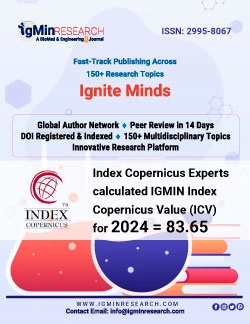
Global Visibility – Indexed in major databases
Fast Peer Review – Decision within 14–21 days
Open Access – Maximize readership and citation
Multidisciplinary Scope – Biology, Medicine and Engineering
Editorial Board Excellence – Global experts involved
University Library Indexing – Via OCLC
Permanent Archiving – CrossRef DOI
APC – Affordable APCs with discounts
Citation – High Citation Potential
現在トレンドになっている記事はどれですか?
研究論文
- From Traditionalism to Algorithms: Embracing Artificial Intelligence for Effective University Teaching and Learning
- Modeling of an Electric-fired Brick Oven, Directly Heated
- A Machine Learning-based Method for COVID-19 and Pneumonia Detection
- Unmyelinated Aortic Baroreceptor Activity is Reduced in a Rabbit Model of Atherosclerosis
- Wishful Thinking or Valuable Forecasts? The Value of Policy Rate Predictions in Sweden
- Audio Signal Classification Using Deep Learning