



要約
Introduction: Gastroenteritis remains a major public health concern in low-income countries. Human adenoviruses (HAdVs), particularly types 40 and 41, and human astroviruses (HAstVs) are among the principal viral agents associated with diarrheal diseases, especially in children. This study aimed to determine the prevalence of adenoviruses and astroviruses among patients and selected marine animals in the Republic of Guinea.
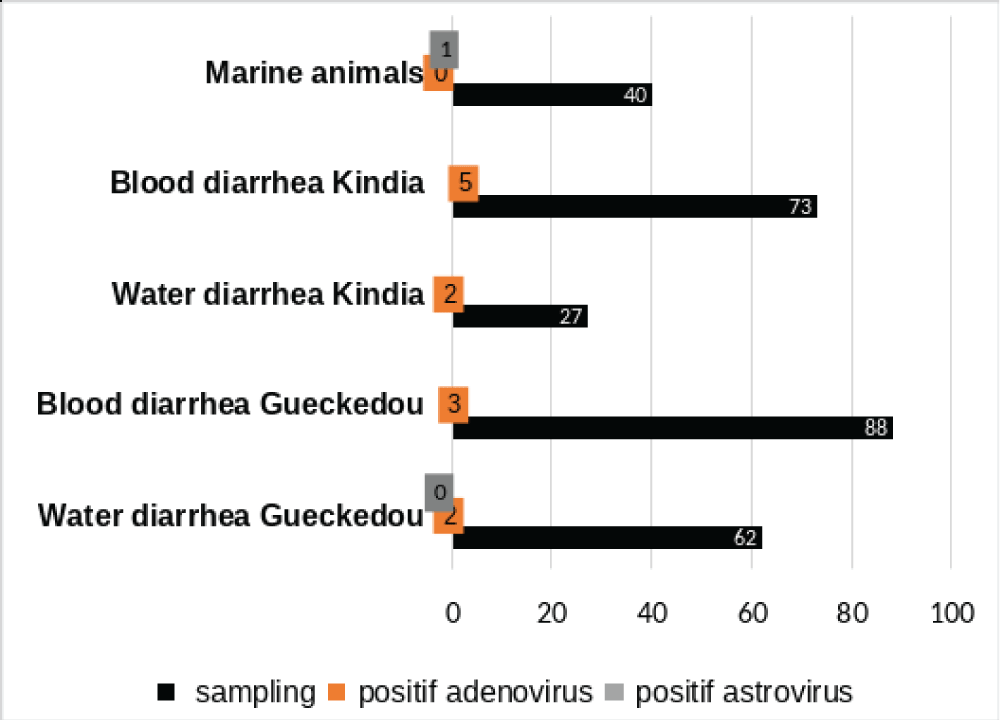
Methods: A total of 290 samples were analyzed, including 250 stool samples from patients presenting with diarrhea at Kindia Regional Hospital and Guéckédou Prefectural Hospital, and 40 samples from marine animals collected in Conakry (fish, crabs, and mollusks). Viral detection was performed using real-time PCR for adenoviruses and RT-PCR for astroviruses. Results were analyzed according to age, sex, season, clinical presentation, and socio-professional category using descriptive statistics and 95% confidence intervals.
Results: Among human samples, 12 out of 250 were positive for adenovirus, corresponding to an overall prevalence of 4.8%. Higher positivity rates were observed among children aged 0–15 years (8.19%) and during the rainy season. No statistically significant differences were observed according to sex or socio-professional category. Astrovirus was detected in one marine animal sample (1/40 (2.5%)), while no positive cases were identified in fish or crabs.
Conclusion: Human adenoviruses circulate among patients with gastroenteritis in Guinea, particularly among children and during the rainy season. The detection of astrovirus in a marine organism suggests a low but potential environmental or foodborne transmission risk, supporting the relevance of an integrated One Health approach.