



要約
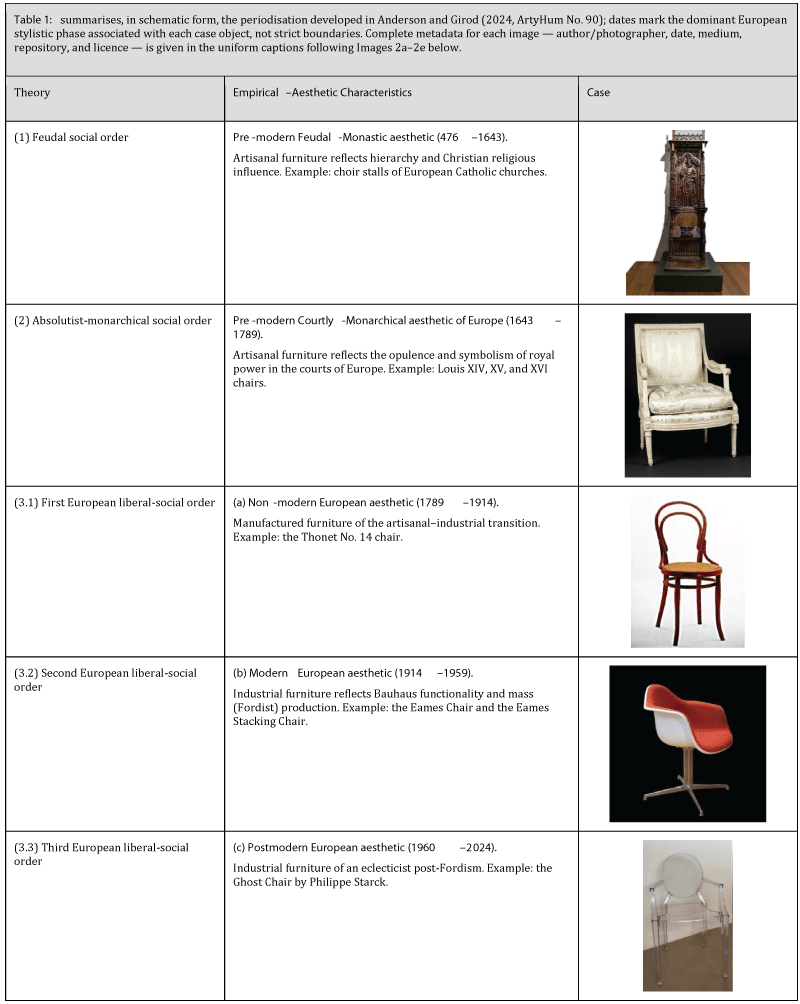
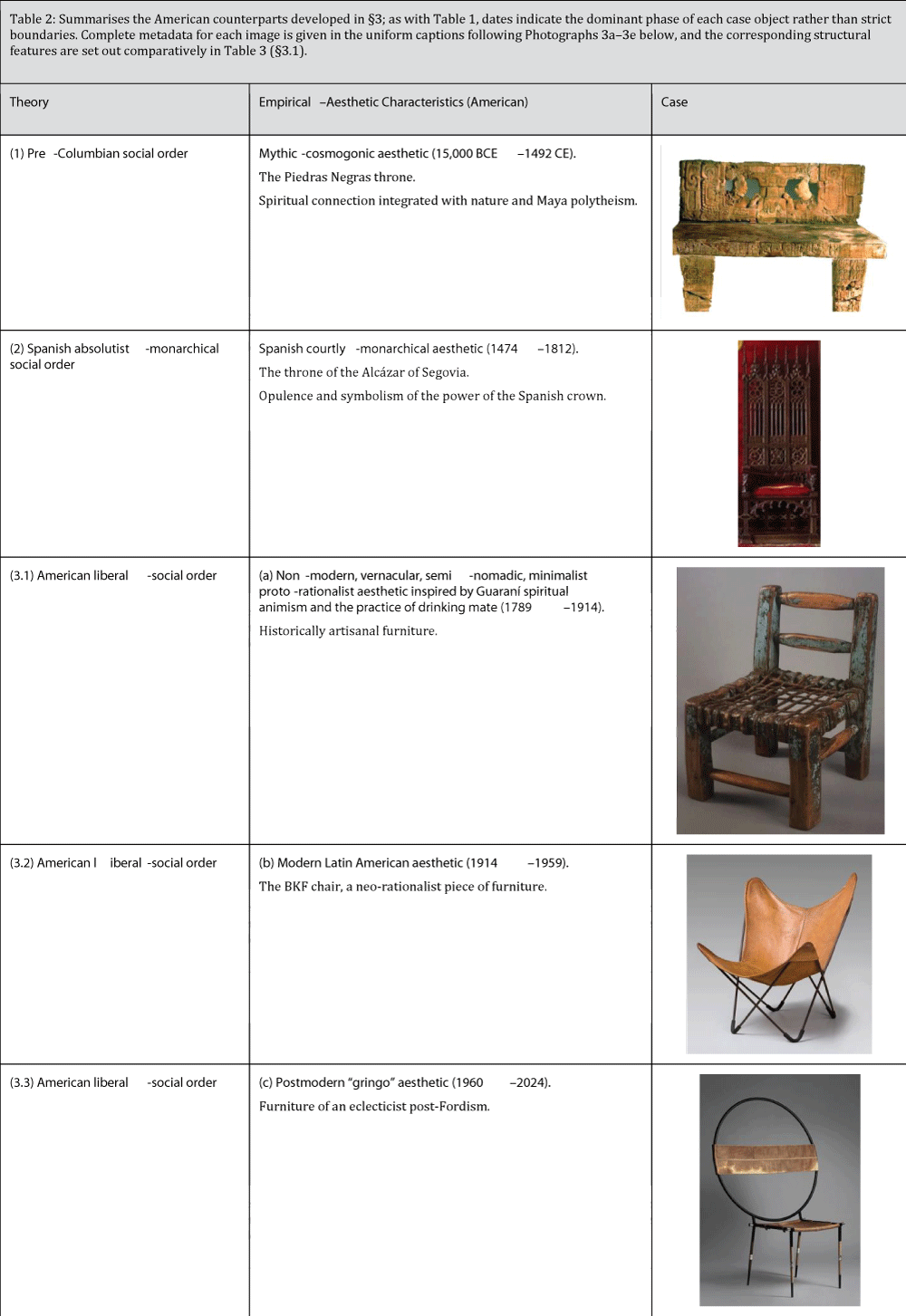
This paper continues the fourth instalment of a series published in ArtyHum, No. 91: “A Brief Western History of Furniture Design (Part 4): The Indo-Ibero-American Chair.” It draws on theoretical concepts developed there and connects them to the doctoral dissertation of Dr Ibar Federico Anderson, industrial designer (National University of La Plata), and to the master’s thesis of architect Gastón Eduardo Girod (University of Buenos Aires), completed at the University of Palermo. The present study revisits concepts first articulated by Anderson in ArtyHum Nos. 71 and 74, together with concepts co-authored by Anderson and Girod in previous instalments published in ArtyHum Nos. 84, 85, and 90. Taken together, these five research articles — which we refer to collectively as a Brief Western History of Furniture, and of the chair in particular — have allowed us to draw parallels between the Old Continent (Europe) and the New (America), tracing a line from the Iberian Peninsula (chiefly Spain) and its American colonies to the development of Latin American material culture. Across these publications, several theoretical concepts have been developed, several of which are resumed and deepened here, while new avenues for theoretical and methodological inquiry are opened. This article builds specifically on the previous instalment, “A Brief Western History of Furniture Design (Part 4): The Indo-Ibero-American Chair” (ArtyHum No. 91), to distil the essential character of the American chair itself. In doing so, it argues that the American chair should be read not as a derivative repetition of European stylistic categories but as the dialectical synthesis of a longer syncretic process — pre-Columbian, colonial, and Creole — and it makes explicit, for the first time in this series, the structural, gendered, and decolonial dimensions of that synthesis.