



Help ?

IGMIN: あなたがここにいてくれて嬉しいです. お願いクリック '新しいクエリを作成してください' 当ウェブサイトへの初めてのご訪問で、さらに情報が必要な場合は.

すでに私たちのネットワークのメンバーで、すでに提出した質問に関する進展を追跡する必要がある場合は, クリック '私のクエリに連れて行ってください.'

Search

Organised by  IgMin Fevicon

Regional sites

Browse by Subjects

Welcome to IgMin Research – an Open Access journal uniting Biology, Medicine, and Engineering. We’re dedicated to advancing global knowledge and fostering collaboration across scientific fields.

Browse by Sections

At IgMin Research, we bridge the frontiers of Biology, Medicine, and Engineering to foster interdisciplinary innovation. Our expanded scope now embraces a wide spectrum of scientific disciplines, empowering global researchers to explore, contribute, and collaborate through open access.

Special Issues

We seek to unite different scientific sectors to stimulate growth and advance collective expertise.

Members

We seek to unite different scientific sectors to stimulate growth and advance collective expertise.

Articles

We seek to unite different scientific sectors to stimulate growth and advance collective expertise.

Explore Content

We seek to unite different scientific sectors to stimulate growth and advance collective expertise.

Identify Us

We seek to unite different scientific sectors to stimulate growth and advance collective expertise.

IgMin Corporation

Welcome to IgMin, a leading platform dedicated to enhancing knowledge dissemination and professional growth across multiple fields of science, technology, and the humanities. We believe in the power of open access, collaboration, and innovation. Our goal is to provide individuals and organizations with the tools they need to succeed in the global knowledge economy.

Publications Support
[email protected]
E-Books Support
[email protected]
Webinars & Conferences Support
[email protected]
Content Writing Support
[email protected]
IT Support
[email protected]

Search

Select Language

Explore Section

Content for the explore section slider goes here.

Abstract

要約 at IgMin Research

We seek to unite different scientific sectors to stimulate growth and advance collective expertise.

Biology Group Research Article 記事ID: igmin348

Towards Sustainable Fisheries Management in Tunisian Reservoirs: A Stock Assessment Approach

Marine Biology DOI10.61927/igmin348 Affiliation

Affiliation

    1University of Carthage, Faculty of Sciences of Bizerte, Zarzouna, 7021 Bizerte, Tunisia

    2University of Carthage, Laboratory of Fisheries Sciences, National Institute of Marine Sciences and Technologies, 28 rue du 2 mars 1934, Salammbô 2025, Tunis, Tunisia

    3Laboratory of Ecology, Biology and Physiology of Aquatic Organisms, Faculty of Sciences of Tunis, University of Tunis El Manar, Tunis, Tunisia

    4University of Carthage, Higher Institute of Marine Sciences of Bizerte, Errimel, B.P. 15,7080 Bizerte, Tunisia

    5University of Carthage, National Agronomic Institute of Tunis, 43, Street Charles Nicolle 1082, Mahrajène, Tunis, Tunisia

    6Technical Center of Aquaculture, Tunis, Tunisia

76
VIEWS
25
DOWNLOADS
Connect with Us

要約

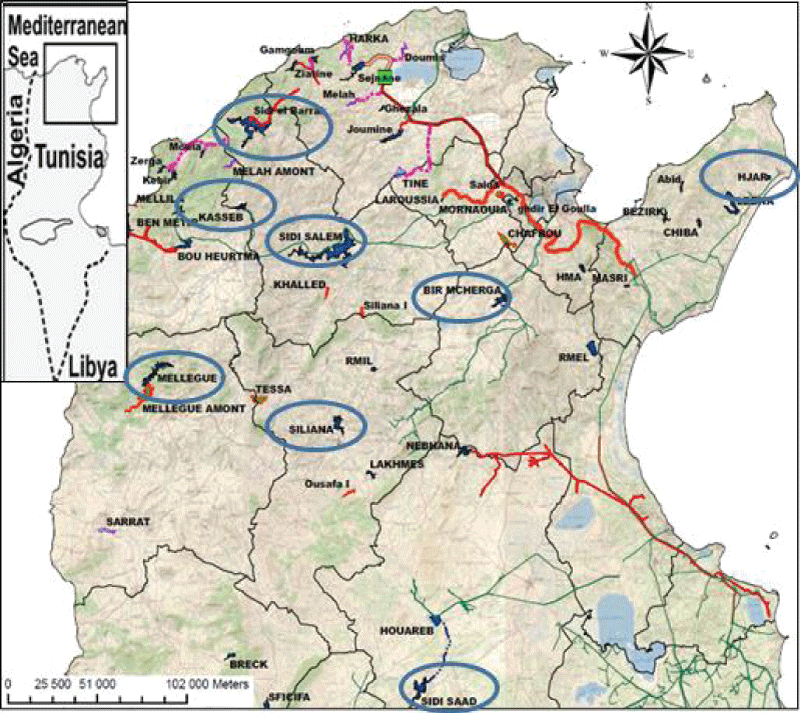
Although assessing fish stocks is essential for sustainable management, quantitative, multi-species evaluations that integrate fishing effort and biological production are scarce in Tunisian reservoirs. This study provides the first comprehensive, standardised assessment of six key species (Cyprinus carpio, Chelon ramada, Luciobarbus callensis, Sander lucioperca, Scardinius erythrophthalmus, and Rutilus rubilio) across eight major reservoirs. It combines multi-mesh gillnet sampling (2013-2016) with yield-per-recruit (Y/R) modelling using VIT software and cohort analysis using FISAT II.
The results reveal a general state of under-exploitation, yet highlight significant differences between species and between reservoirs. Exploitation rates (E) ranged from severe under-exploitation of mullets (E = 0.09) to near-optimal levels of carp in Sidi Saad (E = 0.48). Although fishing mortality exceeded 60% of total mortality for barbel and pikeperch, Y/R analysis confirmed their under-exploited status. This is supported by high biomass per recruit (up to 2,769 g for barbel in Sidi Barrak) and rapid stock renewal rates (over 79% for pikeperch). Notably, estimated surplus production indicates that current landings could be substantially increased without compromising stock sustainability.
We conclude that Tunisian reservoirs have significant untapped fishery potential. However, rather than increasing effort uniformly, we recommend making targeted, site- and species-specific adjustments, coupled with reinforced monitoring of population structure and exploitation rates, in order to prevent any shift towards overfishing. This integrated diagnostic approach provides a replicable scientific baseline for the future adaptive management of North African inland fisheries.

数字

参考文献

    1. Losse GF, Nau W, Winter M. Le développement de la pêche en eau douce dans le nord de la Tunisie. Étude effectuée dans le cadre de la coopération technique Tuniso‑Allemande. Eschborn: GTZ Gmbh; 1992. 418 p.
    2. Mtimet N. Analyse socioéconomique de la filière de la pisciculture continentale au nord‑ouest de la Tunisie. Projet de sauvegarde et de valorisation socio‑économique des ressources environnementales de la région nord‑ouest de la Tunisie. Tunis: Ministère de l’Agriculture et de l’Environnement, coopération italienne; 2010. p.15‑30.
    3. Hajlaoui W, Fatnassi M, Mili S, Ben Salem S, Troudi D, Missaoui H. Characterization of socio‑economic fishing activity in Tunisian reservoir: Sidi Saad (centre of Tunisia), a case study. J Aquac Mar Biol. 2022;11(3):93‑8. doi:10.15406/jamb.2022.11.00342.
    4. Bruslé J, Quignard JP. Biologie des poissons d’eau douce européens. Collection aquaculture‑pisciculture. Paris: Lavoisier; 2001. 625 p.
    5. Cadima EL. Manuel d’évaluation des ressources halieutiques. FAO Document technique sur les pêches. Rome: FAO; 2002. No.393. 160 p.
    6. King M. Fisheries biology, assessment, and management. 2nd ed. Oxford: Wiley‑Blackwell; 2007.
    7. Djemali I, Toujani R, Guillard J. Hydroacoustic fish biomass assessment in man‑made lakes in Tunisia: horizontal beaming importance and diel effect. Aquat Ecol. 2009;43:1121‑31.
    8. Mili S, Ennouri R, Laouar H, Khedhri I, Zarrouk H, Chargui T, Romdhane N. Freshwater fish farming and fishery management in Tunisian reservoirs: limitations and opportunities. In: Khebour Allouche F, Abu‑hashim M, Negm AM, editors. Agriculture productivity in Tunisia under stressed environment. Cham: Springer; 2021. p.309‑34. doi:10.1007/978‑3‑030‑74660‑5_14.
    9. Comité européen de normalisation (CEN). Water quality – Sampling of fish with multi‑mesh gillnets. Norme NF EN 14757. Brussels: CEN; 2015.
    10. Rousseau B, Nelva A, Persat H, Chessel D. Constitution d’une base de données ichtyologique par l’échantillonnage ponctuel d’abondance: application aux peuplements du Haut‑Rhône français. Cybium. 1985;9(Z):157‑73.
    11. Beverton RJH, Holt SJ. On the dynamics of exploited fish populations. London: Ministry of Agriculture, Fisheries and Food; 1957. Fish Invest Ser II, Vol.9. 533 p.
    12. Large dams in Tunisia (Database). Tunis: Ministry of Agriculture and Water Resources, Directorate General of Dams and Major Water Works; 2006.
    13. Snoussi M, Haïda S, Imassi S. Effects of the construction of dams on the water and sediment fluxes of the Moulouya and the Sebou rivers, Morocco. Reg Environ Change. 2002;3(1‑3):5‑12.
    14. Louati MEH, Khanfir R, Alouini A, El Euchi ML, Marzouk A, Frigui L. Stratégie du secteur de l’eau en Tunisie à long terme (2030). Tunis: Ministère de l’Agriculture; 1998. 97 p.
    15. Directorate General of Dams and Major Hydraulic Works (DGBGTH). Hydrological yearbook of Tunisia. Tunis: Ministry of Agriculture, Water Resources, and Fisheries; 2021. 123 p.
    16. Kraïem MM. Les poissons d’eau douce de Tunisie: peuplement, répartition et écologie. Bull Inst Natl Sci Tech Océanogr Pêche Salammbô. 1998;25:111‑34.
    17. Directorate General of Fisheries and Aquaculture (DGPA). Directory of fisheries and aquaculture statistics in Tunisia. Tunis: Ministry of Agriculture, Water Resources, and Fisheries; 2023. 145 p.
    18. Mili S, Ennouri R, Laouar H, Missaoui H. Fisheries in the Tunisian dams: diagnosis of the current situation and development opportunities. In: FAO Fisheries and Aquaculture Proceedings No.39. Rome: FAO; 2015. p.95‑106.
    19. Laouar H. Assessment of fishery resources in dam reservoirs in Tunisia: intercalibration of acoustic and gillnet sampling [doctoral thesis]. Tunis: National Agronomic Institute of Tunisia; 2019. 133 p.
    20. Mili S, Hajlaoui W, Ennouri R, Fatnassi M, Laouar H. Rapport technique sur l’échantillonnage des peuplements piscicoles au niveau des retenues de barrage en Tunisie moyennant des filets multimailles. Tunis: Ministère de l’Agriculture, des Ressources Hydrauliques et de la Pêche; 2022. 217 p.
    21. Mili S, Ennouri R, Fatnassi M, Agrebi S, Chargui T, Laouar H. The use of geographic information system (GIS) data to assess and rebuild stocks in Tunisia’s largest freshwater reservoirs. In: Khebour Allouche F, editor. Environmental remote sensing and GIS in the MENA region. Cham: Springer; 2026. p.41‑54. doi:10.1007/978‑3‑031‑86574‑9_4.
    22. Pauly D. Fish population dynamics in tropical waters: a manual for use with programmable calculators. Manila: ICLARM; 1984. ICLARM Stud Rev.
    23. Sparre P, Venema SC. Introduction to tropical fish stock assessment. Part 1: Manual. FAO Fish Tech Pap. 1998;306.1 Rev.2.
    24. von Bertalanffy L. A quantitative theory of organic growth (inquiries on growth laws II). Hum Biol. 1938;10(2):181‑213.
    25. Pauly D. A selection of simple methods for assessment of tropical fish stocks. FAO Fish Circ. 1980;729:1‑54.
    26. Taylor CC. Temperature and growth: the Pacific razor clam. ICES J Mar Sci. 1959;25(1):93‑101. doi:10.1093/icesjms/25.1.93.
    27. Then AY, Hoenig JM, Hall NG, Hewitt DA. Evaluating the predictive performance of empirical estimators of natural mortality rate for fishes. ICES J Mar Sci. 2015;72(1):82‑92. doi:10.1093/icesjms/fsu136.
    28. Gulland JA. Fish stock assessment: a manual of basic methods. FAO/Wiley Ser Food Agric. Chichester: Wiley; 1983.
    29. Hewitt DA, Lambert DM, Hoenig JM, Lipcius RN, Bunnell DB, Miller TJ. Direct and indirect estimates of natural mortality for Chesapeake Bay blue crab. Trans Am Fish Soc. 2007;136:1030‑40.
    30. Lieonart J, Salat J. VIT: Programa d’analisis de pesquerias. Informes Técnicos de Scientia Marina. 1992;116 p.
    31. Poulet N, Seon‑Massin N, Basilico L. Biodiversité aquatique: du diagnostic à la restauration. Synthèse du séminaire. Paris: Ministère de l’Environnement; 2012. 46 p.
    32. Nelson JS. Fishes of the world. 3rd ed. New York: Wiley; 1994. 600 p.
    33. Guillard J. Étude des stocks piscicoles lacustres par écho‑intégration: problèmes méthodologiques [doctoral thesis]. Lyon: Univ Lyon I; 1991. 148 p.
    34. Appelberg M, Berger HM, Hesthagen T, et al. Development and intercalibration of methods in Nordic freshwater fish monitoring. Water Air Soil Pollut. 1995;85:401‑6. doi:10.1007/BF00476862.
    35. Mili S, Ennouri R, Dhib A, Laouar H, Missaoui H, Aleya L. Characterization of fish assemblages and population structure of freshwater fish in two Tunisian reservoirs: implications for fishery management. Environ Monit Assess. 2016;188(364):1‑11.
    36. Mili S, Ennouri R, Fatnassi M, Agrebi S, Louiz I, Khattab Y, Hedfi A, Ben Ali M, Laouar H. Investigating freshwater mullet fisheries in Tunisian reservoirs: future development prospects. Water. 2023;15(14):2554. doi:10.3390/w15142554.
    37. Gayanilo FC, Sparre P, Pauly D. FAO‑ICLARM Outils d’évaluation des stocks II (FiSAT II). Version révisée. Guide d’utilisation. Rome: FAO; 2005. 190 p.
    38. Série informatique Pêche: guide d’utilisation de FISAT II. Rome: FAO; 2005.
    39. Wetherall JA. A new method for estimating growth and mortality parameters from length‑frequency data. ICLARM Fishbyte. 1986;4(1):12‑4.
    40. Pauly D. On the interrelationships between natural mortality, growth parameters, and mean environmental temperature in 175 fish stocks. ICES J Mar Sci. 1980;39(2):175‑92.
    41. Djemali I. Évaluation de la biomasse piscicole dans les plans d’eau douces tunisiens: approche analytique et acoustique [doctoral thesis]. Tunis: National Institute of Agronomy of Tunisia; 2005. 250 p.
    42. Mili S, Ennouri R, Laouar H, Aleya L. Optimization of fishing for stock enhancement of Rutilus rutilus and Scardinius erythropththalmus in forage fish‑deficient Tunisian reservoirs. Environ Monit Assess. 2017;189(610):1‑12.
    43. Roff DA. The evaluation of life history in teleosts. Can J Fish Aquat Sci. 1984;41:989‑1000.
    44. Mehner T, Diekmann M, Brämick U, Lemcke R. Composition of fish communities in German lakes as related to lake morphology, trophic state, shore structure, and human‑use intensity. Freshw Biol. 2005;50:70‑85.
    45. Boisneau P, Mennesson‑Boisneau C. Inland commercial fisheries management. Fish Manag Ecol. 2001;8:303‑10.
    46. Lammens EHRR. Consequences of biomanipulation for fish and fisheries. FAO Fish Circ. 2001.
    47. Lorenzoni M, Dörr AJM, Erra R, Giovinazzo G, Mearelli M, Selvi S. Growth and reproduction of largemouth bass (Micropterus salmoides) in Lake Trasimeno (Umbria, Italy). Fish Res. 2002;56:89‑95.
    48. Toujani R. Le sandre (Stizostedion lucioperca) de la retenue de Sidi‑Salem (Tunisie): biologie et dynamique de population [doctoral thesis]. Lyon: Univ Claude Bernard Lyon I; 1998. 176 p.
    49. Kraiem M. Systématique, biogéographie et bio‑écologie de Barbus callensis Valenciennes, 1842 (poisson, Cyprinidae) de Tunisie [doctoral thesis]. Tunis: Univ Tunis; 1994. 227 p.
    50. Djemali I, Laouar H, Toujani R. Distribution patterns of fish biomass by acoustic survey in three Tunisian man‑made lakes. J Appl Ichthyol. 2010;26:390‑6.
    51. Ben Rejeb‑Jenhani A, Fathalli A, Djemali I, Changeux T, Romdhane MS. Tunisian reservoirs: diagnosis and biological potentialities. Aquat Living Resour. 2019;32:17. doi:10.1051/alr/2019014.
    52. M’Hetli M. Le sandre Stizostedion lucioperca (Linnaeus, 1758), poisson allochtone: étude biologique et essai d’optimisation des critères de l’élevage [doctoral thesis]. Tunis: Univ Tunis; 2001.
    53. Laouar H, Marzouki M, Briki H, Mili S. Note technique sur la reproduction contrôlée du sandre, Sander lucioperca, en cages dans les retenues des barrages tunisiennes. Bull CTA Échos Aquac. 2016;5:10‑3.
    54. Mili S, Ennouri R, Laouar H, Missaoui H. Étude de l’âge et de la croissance chez deux espèces de Mugilidae (Mugil cephalus et Liza ramada) dans trois retenues de barrages en Tunisie. Bull Soc Zool Fr. 2015;140(3):181‑97.
    55. Mili S, Bouriga N, Ennouri R, Laouar H, Missaoui H. Identification, répartition spatio‑temporelle et caractérisation génétique des alevins de Muges ensemencés dans les retenues de barrages tunisiennes. Cybium. 2013;37(1‑2):67‑73.
    56. Romdhane MS, Fassatoui C, Shaiek M, Ben Rejeb Jenhani A, Changeux T. Mugilid fisheries of Tunisian coasts and lagoons. Aquat Living Resour. 2019;32(6). doi:10.1051/alr/2019005.
    57. Chargui T, Ennouri R, Rjeibi M, Fatnassi M, Laouar H, Romdhane N, Mili S. What can fisheries managers learn
    58. Mili S, Ennouri R, Agrebi S, Fatnassi M, Chargui T, Hedfi A, Ben Ali M, Boufahja F, Laouar H. Under threat in North African reservoirs: the decline of the Algerian barb, Luciobarbus callensis (Actinopterygii, Cypriniformes, Cyprinidae), in Tunisia as a case study. Acta Ichthyol Piscat. 2026;56:41‑54. doi:10.3897/aiep.56.157532.
    59. Chargui T, Fatnassi M, Ennouri R, Zarrouk H, Laouar H, Romdhane N, Mili S. Exploring freshwater fish assemblages and population structure in three Tunisian reservoirs for better fishery management. Biodivers Int J. 2021;5(2):37‑45. doi:10.15406/bij.2021.05.00196.
    60. Ricker WE. Computation and interpretation of biological statistics of fish populations. Bull Fish Res Board Can. 1975;191.

類似の記事

Why publish with us?

  • Global Visibility – Indexed in major databases

  • Fast Peer Review – Decision within 14–21 days

  • Open Access – Maximize readership and citation

  • Multidisciplinary Scope – Biology, Medicine and Engineering

  • Editorial Board Excellence – Global experts involved

  • University Library Indexing – Via OCLC

  • Permanent Archiving – CrossRef DOI

  • APC – Affordable APCs with discounts

  • Citation – High Citation Potential

Submit Your Article

Advertisement