


Help ?

IGMIN: あなたがここにいてくれて嬉しいです. お願いクリック '新しいクエリを作成してください' 当ウェブサイトへの初めてのご訪問で、さらに情報が必要な場合は.

すでに私たちのネットワークのメンバーで、すでに提出した質問に関する進展を追跡する必要がある場合は, クリック '私のクエリに連れて行ってください.'

Search

Organised by  IgMin Fevicon

Regional sites

Browse by Subjects

Welcome to IgMin Research – an Open Access journal uniting Biology, Medicine, and Engineering. We’re dedicated to advancing global knowledge and fostering collaboration across scientific fields.

Browse by Sections

At IgMin Research, we bridge the frontiers of Biology, Medicine, and Engineering to foster interdisciplinary innovation. Our expanded scope now embraces a wide spectrum of scientific disciplines, empowering global researchers to explore, contribute, and collaborate through open access.

Special Issues

Our focus is to create a space where fields overlap and new knowledge can be discovered.

Members

Our focus is to create a space where fields overlap and new knowledge can be discovered.

Articles

Our focus is to create a space where fields overlap and new knowledge can be discovered.

Explore Content

Our focus is to create a space where fields overlap and new knowledge can be discovered.

Identify Us

Our focus is to create a space where fields overlap and new knowledge can be discovered.

IgMin Corporation

Welcome to IgMin, a leading platform dedicated to enhancing knowledge dissemination and professional growth across multiple fields of science, technology, and the humanities. We believe in the power of open access, collaboration, and innovation. Our goal is to provide individuals and organizations with the tools they need to succeed in the global knowledge economy.

Publications Support
[email protected]
E-Books Support
[email protected]
Webinars & Conferences Support
[email protected]
Content Writing Support
[email protected]
IT Support
[email protected]

Search

Select Language

Explore Section

Content for the explore section slider goes here.

Abstract

要約 at IgMin Research

Our focus is to create a space where fields overlap and new knowledge can be discovered.

General-science Group Research Article 記事ID: igmin355

What is the Hybrid Lognormal Distribution?

Biostatistics DOI10.61927/igmin355 Affiliation

Affiliation

    Koyama 3-15-12, Nerima-ku, Tokyo, 176-0022, Japan

91
VIEWS
26
DOWNLOADS
Connect with Us

要約

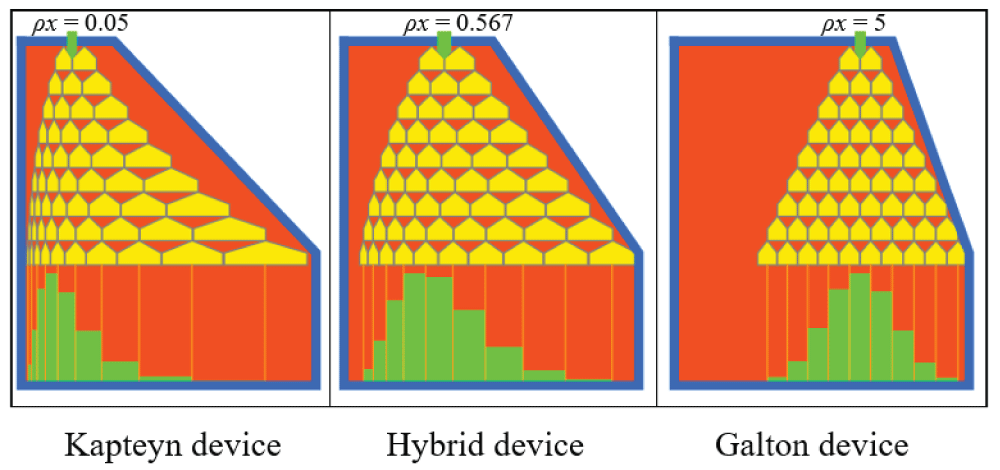
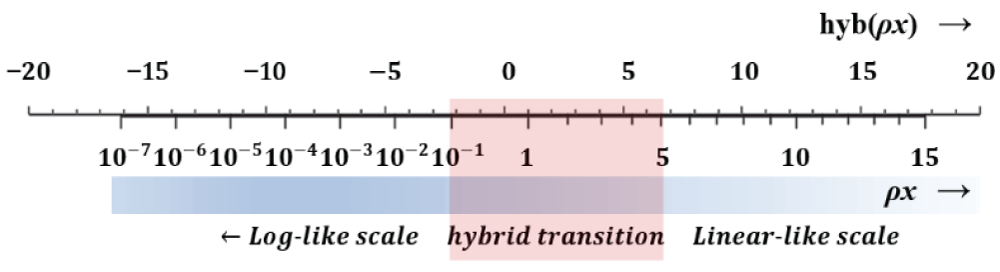
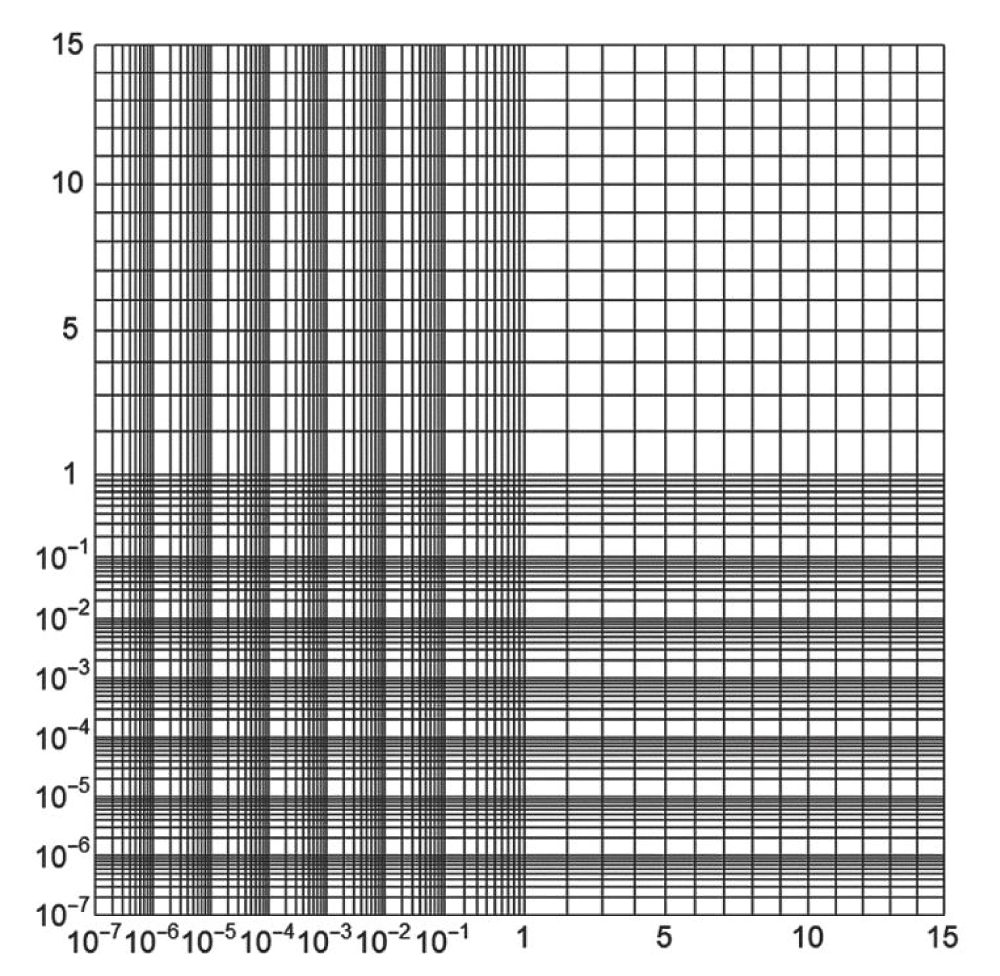
This paper reports on a case study in radiation protection, revealing that the statistical phenomena observed in the dose distribution of workers under dose reduction management exhibit an intriguing new probability distribution. This distribution unifies the lognormal and the normal distributions—previously considered distinct—by replacing the upper tail of the former with that of the latter. It is adjusted by the parameter ρ from the former (ρ → 0) to the latter ( → ∞), allowing for an accurate analysis of the statistical phenomena existing between the two. This is the “hybrid lognormal (HLN) distribution,” defined by the hybrid transformation hyb(ρX) = ln X + X, which replaces the logarithmic transformation ln X. The stimulus η = Δhyb(ρX) yields the increment ΔX = ηX/(1+ρX). Interpreting the numerator as the risk increment and the denominator as the risk reduction (achieved through feedback control), this equation represents the simplest risk management principle. The hybrid transformation is visualized as a hybrid scale (HS) consisting of a logarithmic scale and a linear scale, demonstrating its utility in evaluating the effectiveness of risk management. We discuss the background of this case study, the generation mechanism and statistical characteristics of the HLN distribution, application examples, as well as its position within the context of probability distributions and the applicability of the hybrid scale to case studies.

数字

参考文献

    1. 1990 recommendations of the ICRP. ICRP Publ 60. Ann ICRP. 1991;21(1‑3).
    2. Kumazawa S, Shimazaki J, Numakunai T. Computational algorithms for the hybrid lognormal distribution (in Japanese). Proc 2nd Symp Appl Stat. Tokyo; 1980 Oct 25. Abstracts D3‑1–D3‑10. Jpn Soc Appl Stat.
    3. Kumazawa S, Shimazaki J, Numakunai T. Numerical calculation methods relating to hybrid lognormal distributions (in Japanese). JAERI‑M 82‑035. 1982 Apr.
    4. Kumazawa S, Numakunai T. A new theoretical analysis of occupational dose distributions indicating effects of dose limits. Health Phys. 1981;41(3):465‑75.
    5. Kumazawa S. The generation mechanism of the hybrid lognormal distribution and its engineering applications (in Japanese). IEICE (A). 1982;J65‑A(2):201‑2.
    6. Kumazawa S, Ohashi Y. Hybrid lognormal distribution and its application (in Japanese). Jpn J Appl Stat. 1986;15(1):1‑14.
    7. Kotz S, Johnson NL. Encyclopedia of statistical sciences. Supplement Vol. New York: John Wiley & Sons; 1989.
    8. Masuyama G. To all students who don’t want to end up as computer parts (in Japanese). Tokyo: Misuzu Shobo; 1987. ISBN: 4‑622‑02491‑8.
    9. Sources and effects of ionizing radiation. 1977 report of United Nations Scientific Committee on the Effect of Atomic Radiation. Annex E. United Nations; 1977.
    10. 1977 recommendations of the ICRP. ICRP Publ 26. Ann ICRP. 1977;1(3).
    11. Gale HJ. The lognormal distribution and some examples of its application in the field of radiation protection. AERE‑R4736. 1965.
    12. Warman EA, McMellon RL, Cardito JM. Occupational radiation: exposure reduction technology planning study. US EPRI NP‑1962. 1981.
    13. Kumazawa S. The relationship between average and maximum doses within the lognormal population (in Japanese). Proc Atomic Energy Soc Jpn Fall Meeting Health Phys. 1973;2.
    14. Kumazawa S, Nelson DR, Richardson ABC. Occupational exposure to ionizing radiation in the United States: a comprehensive review for the year 1980 and a summary of trends for the years 1960‑1985. US EPA. EPA 520/1‑84‑005. 1984 Sep.
    15. Federal Register. 1987 Jan 30, Feb 4.
    16. Kumazawa S, Matsushita K, Yamamoto H, Numakunai T. Hybrid lognormal analysis of worker doses in special jobs at research reactors JRR‑2 and JRR‑3. Proc 7th IRPA Congr. Sydney. 1988:589‑92.
    17. Sont WN, Ashmore JP. 1984 annual radiation doses in Canada: lognormal and hybrid lognormal analysis using maximum likelihood estimation. Health Phys. 1988;54(2):211‑9.
    18. Ionizing radiation: sources and biological effects. 1982 report of United Nations Scientific Committee on the Effect of Atomic Radiation. Annex H. United Nations; 1982.
    19. Wiener N. Cybernetics or control and communication in the animal and the machine. 2nd rev ed. Cambridge (MA): MIT Press; 1961.
    20. Kapteyn JC. Skew frequency curves in biology and statistics. Groningen: Astronomical Laboratory Noordhoff; 1903.
    21. Kumazawa S. A basic mathematical model for reasonably avoiding risks incurred by seeking net benefit (in Japanese). Proc 2nd Horizontal Cross‑Sector Federation Conf. Kyoto Univ. 2007 Nov 29‑30.
    22. Kumazawa S. A biological risk management model combining the law of stochastic proportional effects and feedback effects. Life Sci Stat Symp. on Grants-in-Aid for Scientific Research (KAKENHI), Osaka Univ Sigma Hall. 2011 Nov 3-5.
    23. Kumazawa S. A method of analyzing data linearly plotted on 2D hybrid scale graph paper (in Japanese). Jpn J Appl Stat. 2019;48(3):85‑94.
    24. Koshurnikova NA, Shilnikova NS, Okatenko PV, Kreslov VV, Bolotnikova MG, Sokolnikov ME, et al. Characteristics of the cohort of workers at the Mayak nuclear complex. Radiat Res. 1999;152:352‑63.
    25. Grant EJ, Brenner A, Sugiyama H, Sataka R, Sadakane A, Utada M, et al. Solid cancer incidence among the life span study of atomic bomb survivors: 1958‑2009. Radiat Res. 2019;187:000‑000.
    26. Kumazawa S. Reappraisal of the reference dose distribution in the UNSCEAR 1977 report. Proc 12th IRPA Congr. Buenos Aires. 2008 Oct 19‑24.
    27. Kumazawa S, Toyota N, Katoh K. Application of dose distribution models to the functional assessment of radiation protection measures in a group—considering workers’ satisfaction with radiation protection. Annals of the ICRP. 2026;0(0). doi:10.1177/01466453251411684.
    28. Bragin Y, Chizhov K, Sneve MK, Tsovyanov A, Shandala N, Siegien K, et al. Topographical classification of dose distributions: implications for control for worker exposure. J Radiat Prot. 2020;40(2):410‑30. doi:10.1088/1361‑6498/ab6ee3.
    29. Kong TY, Kim SY, Jung Y, Kim JM, Cho M. Administrative dose control for occupationally‑exposed workers in Korean nuclear power plants. Nucl Eng Technol. 2021;53:351‑6. doi:10.1016/j.net.2020.06.023.
    30. Galton F. The geometric mean, in vital and social statistics. Proc R Soc Lond. 1879;29:365‑7.
    31. Aitchison J, Brown JAC. The lognormal distribution. Cambridge: Cambridge Univ Press; 1957.
    32. Pascal B. Traité du triangle arithmétique. Paris; 1654. Publ posthum 1665.
    33. Kumazawa S. On a hybrid scale model of dose‑response relationships universally applied to various data to ionizing radiation exposure. Proc ANS & HPS Joint Topical Mtg. Tri‑Cities (WA). 2018 Sep 30‑Oct 3.
    34. Indrawati I, Kumazawa S. Analysis of chromosome aberration data by hybrid‑scale models. JAERI‑Res. 2000‑005. 2000 Feb.
    35. Gill RD. Understanding Cox’s regression model: a martingale approach. J Am Stat Assoc. 1984;79:441‑7.

Why publish with us?

  • Global Visibility – Indexed in major databases

  • Fast Peer Review – Decision within 14–21 days

  • Open Access – Maximize readership and citation

  • Multidisciplinary Scope – Biology, Medicine and Engineering

  • Editorial Board Excellence – Global experts involved

  • University Library Indexing – Via OCLC

  • Permanent Archiving – CrossRef DOI

  • APC – Affordable APCs with discounts

  • Citation – High Citation Potential

Submit Your Article

Advertisement